
Tuesday 06 April, 2021
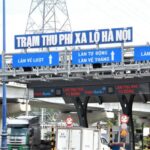
The Standing Committee of the Ho Chi Minh City Party Committee has issued a conclusion on the road-use service fee plan to recover investment capital for the BOT project to expand Hanoi Highway and National Highway 1.

10% toll reduction due to Covid-19
Accordingly, the Standing Committee of the Ho Chi Minh City Party Committee agreed that the expected date to begin collecting road-use service fees to recover investment capital for the Hanoi Highway expansion BOT project and National Highway 1 (the section from the former Tram 2 intersection to Tan Van intersection) would be April 1, at least 10 days after the City People’s Committee issues the maximum fee level.
After one year of implementation, the City People’s Committee will direct the Department of Transport to require the investor, Ho Chi Minh City Infrastructure Investment Joint Stock Company (CII), and the project enterprise (Hanoi Highway Investment and Construction Joint Stock Company) to review and update actual vehicle data and compare it with the approved fee plan. Based on this, they will propose that the City People’s Committee consider adjusting the maximum fee appropriately to harmonize the interests of the State, users and the investor, while ensuring the feasibility of recovering investment capital for the entire project.
According to the latest Decision of the City People’s Committee, road-use service fees for vehicles passing through the Hanoi Highway BOT station are as follows: vehicles with fewer than 12 seats and trucks with a load capacity under 2 tons: VND 28,000/ticket/trip; vehicles with 12-30 seats and trucks with a load capacity from 2 to under 4 tons: VND 42,000/ticket/trip; vehicles with 31 seats or more and trucks with a load capacity from 4 to under 10 tons: VND 55,000/ticket/trip; trucks with a load capacity from 10 to under 18 tons and vehicles carrying 20-ft containers: VND 110,000/ticket/trip; trucks with a load capacity over 18 tons and vehicles carrying 40-ft containers: VND 155,000/ticket/trip.
To support residents and businesses in overcoming difficulties caused by the Covid-19 pandemic, Ho Chi Minh City People’s Committee adjusted tolls downward by 10% for the first year (from 0:00 on April 1, 2021 to 24:00 on March 31, 2022), corresponding to VND 25,000-140,000 depending on vehicle type.
The company begins selling monthly and quarterly passes from March 25
In addition to the 11 categories exempt from road-use service fees, similar to the provisions of Circular No. 35 issued on November 15, 2016 by the Ministry of Transport, Ho Chi Minh City also approved a 100% toll reduction for buses operating on fixed routes through the Hanoi Highway station to encourage the use of public transport, and a 50% toll reduction for cars with fewer than 12 seats not used for business whose owners have permanent residence (or long-term temporary residence for more than 6 months before the Hanoi Highway toll station begins operation) along the frontage roads of the Hanoi Highway corridor, including households living in apartment buildings facing those frontage roads.
At present, the People’s Committees of 11 wards in Thu Duc City are compiling lists of vehicle owners eligible for the 50% reduction and will coordinate with the project enterprise to attach ETC tags for these vehicle owners on March 20, 21 and 22 at ward People’s Committee offices and apartment buildings.
More than a decade of difficulties
The Hanoi Highway expansion project is 15.7 km long, running from the foot of Saigon Bridge (former District 2) to Tan Van intersection (adjacent to the new Dong Nai Bridge construction project), and commenced in 2010. Under the plan, the City People’s Committee planned the route cross-section to be 113.5 m and 153.51 m wide, with 14-20 lanes. The project consists of three sections: Saigon Bridge to Binh Thai intersection (6.2 km); Binh Thai intersection to Tram 2 intersection (5.3 km); and Tram 2 intersection to Tan Van intersection (4.2 km).
The main construction items include upgrading and widening the main road from 23 m to 48 m, 41 m and 34 m depending on the section; building two new frontage roads on both sides of the main road, each averaging 12 m in width; and constructing new drainage, lighting, trees and sidewalks on both sides, together with other items such as lighting systems, trees on medians and road-and-bridge maintenance while awaiting toll collection.
Under the BOT Contract Appendix, the project was to begin collecting tolls on October 1, 2008. However, 14 years have passed and only now has the enterprise officially been permitted to collect tolls to recover its investment, despite having completed 100% of the main road, upgraded and asphalted the entire Di An (Binh Duong) section for traffic, completed 93% of the right frontage road and 74% of the left frontage road, creating a wide and attractive route with medians and greenery along the corridor.
The investor stated that the two frontage roads have not reached 100% completion because the City has not handed over all sites and because their boundaries overlap with several other projects, including Metro Line No. 1, the City’s Environmental Sanitation Project Phase 2, and the D2400mm clean-water transmission pipeline project from Binh Thai intersection to Dien Bien Phu Bridge. Therefore, construction of the two frontage roads had to stop so that these three projects could be completed first, avoiding repeated excavation and overlapping work.
Having carried out construction on all sites handed over, with the entire main route from Saigon Bridge to the National University intersection accepted, handed over and put into use, the City People’s Committee affirmed that the investor had satisfied the conditions for toll collection required under Clause 5.2.2 of Article 5 of the BOT Contract Appendix and Clause 1, Article 65 of the National Assembly’s Law No. 64 on investment under the public-private partnership method.
Source: https://thanhnien.vn/tai-chinh-kinh-doanh/bot-xa-lo-ha-noi-sap-thu-phi-gia-ve-bao-nhieu-1356132.html
Latest News



Share: